Multiple factors shape the experience of our users. As a mobile developer, but also as an engineering manager, I learned that nothing is more likely to drive users away than a poorly performing app. So this is why we, as developers, should focus on continuously improving this attribute.
This is the third article aboutMBS.works – The Year of Living Brilliantly that contains the latest lessons of the program. Just like in the first and second articles, I added my notes for each session, plus references to learn more about the person who is talking about that topic.
2021 was a busy year, especially on the professional side. Just like the past year, I hope for a healthy and safe 2022, with all the dear people around me and more focus on the things that truly matter.
My journey as an Android mentor and trainer for Atelierul Digital pentru Programatori has continued also this year. Every time a group of students graduates I am amazed by their creativity, perseverance, and especially about their final projects.
“Atelierul digital pentru Programatori” is a program started by Google Romania in 2018 and it happens in multiple tech universities from Romania. I teach Android Fundamentals and I also created the curricula and the materials for this course that is organised in Bucharest, Cluj-Napoca, Timisoara, and Iasi. Until now I trained more than 240 students and it is an amazing experience.
On November 13th, I participated at DevFest Romania 2021 as a co-organiser, moderator and speaker. It’s the 7th edition, so it is actually a tradition for me to be part of this event.
These years I discovered how helpful is to ask the right question when I am engaged in a conversation or meeting with my team or with one of my coworkers. I understood that by asking relevant questions I help my team members to find their own solutions that fit better their needs and for sure by doing so they are more committed and involved to implement them.
I read and enjoyed very much the idea of “manager as a teacher” and then this concept connected in my mind with the very powerful skill of asking good questions that will empower and help my team members to be successful.
I talked about this topic in an 1:1 with an Agile Coach and he recommended me this book: “The Coaching Habit” by Michael Bungay Stanier, and yes, for sure, this book is an amazing source of knowledge and inspiration about how to improve your skill of asking questions and making it a habit, the coaching habit. It was an incredible gift for me. 🎁 And this article is a summary of that book.
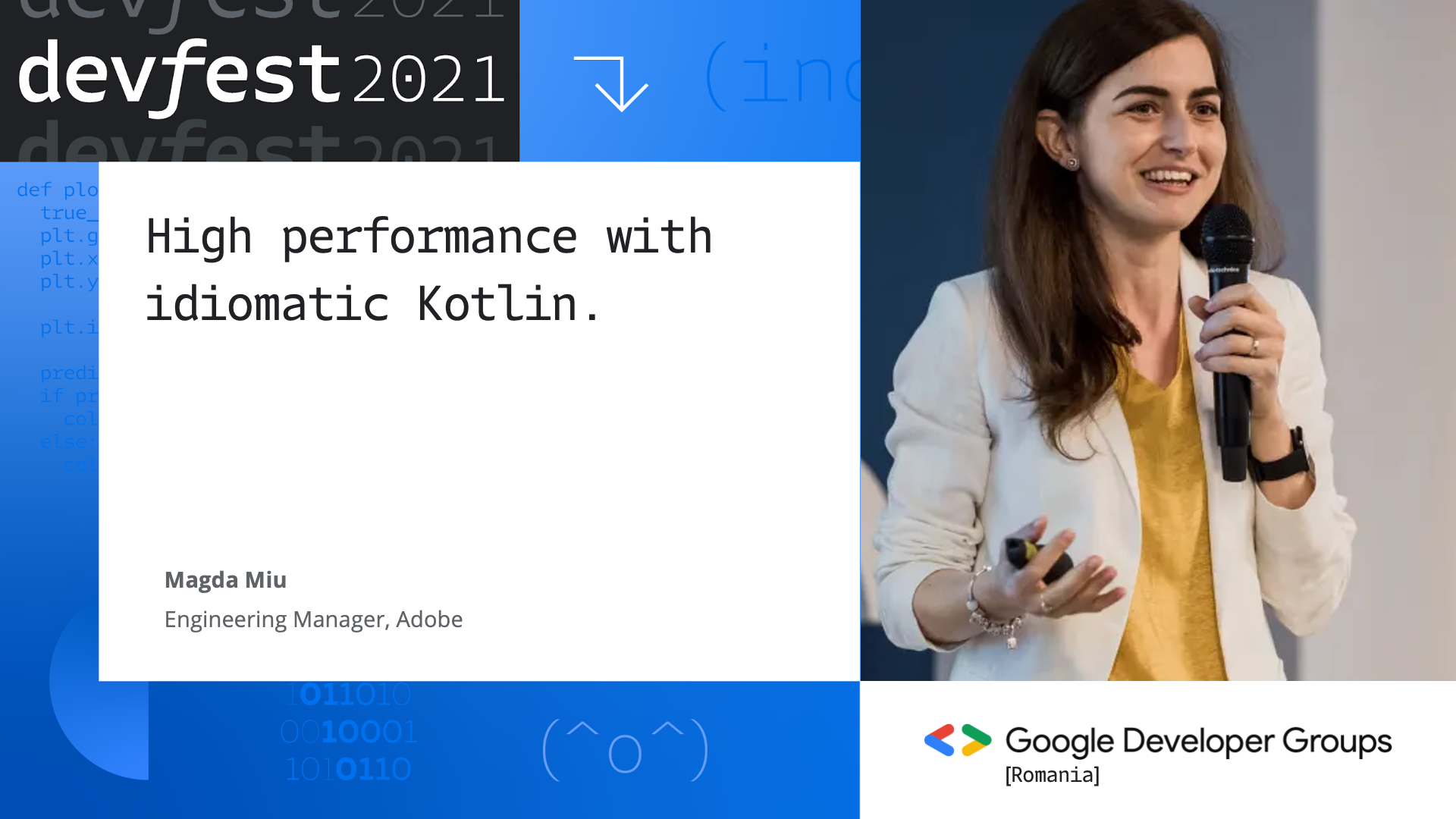
On October 29th, at droidcon London, I talked about how to achieve high performance with idiomatic Kotlin.
Multiple factors shape the experience of our users. However, nothing is more likely to drive users away than a poorly performing app and this is why we, as developers, should focus on continuously improving this attribute.
In my talk, I will emphasize the role of performance, how we can measure it, what are the main reasons that contribute to lower performance, and finally, how to use Kotlin to solve all these challenges.
Kotlin’s philosophy is to create a modern and pragmatic language for the industry, not an academic one. So I will focus on showing why developers love this language and how it could help us to build quality products by writing maintainable, secure, and expressive Kotlin code in an idiomatic way.
This blog post is different than the usual content from here. This time I would like to share with you 3 books that helped me a lot in my career as a leader. I love to read books and after I finish reading a book I do a schema or a summary, or a mindmap to extract the useful info for me, to build my leadership toolbox.🧰 From these 3 books, I learned more about myself, about how important is to understand my WHY, or how helpful are OKRs even to build a personal learning plan. I also understood how essential is to create a context where my team can be successful and motivated to do their best. Happy reading! 🤓📚
With Kotlin we can write concise, expressive, and safe code. Sounds like clean code, doesn’t it?
In this article we will recap what clean code is, we will highlight the importance of defining meaningful names, and how to write clean functions and classes.
Finally, we will be able to learn more about the advantages of immutability, how to handle the errors in Kotlin, and what are the best practices in terms of writing tests. By the end of this blog post, you will better understand what clean code means and learn a series of tips and tricks ready to be applied in your code.
“Coding is not a sprint, is a marathon” so let’s exercise together our clean code skills.








 Magda Miu